






How dining space design can strengthen a furnished rental investment
A well-planned dining area can make a furnished rental feel more complete, more practical and easier to imagine as a home. Yet a polished table setting should never distract you from the investment fundamentals. Before purchasing, you should assess whether the space supports daily living, withstands repeated use and matches the expectations of the tenants you intend to attract.
The dining area deserves attention during a property viewing
When viewing a buy-to-let property, measure the usable dining zone rather than relying on the room’s overall dimensions. A kitchen may look generous until a table and four chairs are placed near doorways, radiators or appliance cupboards. You should check whether residents can pull out chairs, carry plates safely and move between the kitchen, dining table and living space without obstruction.
Look beyond staged furniture. A compact two-seat table can make a room appear spacious during a viewing, while the likely tenant group may need seating for four. Consider the location of power sockets, natural light, ceiling fixtures and nearby storage. These small details affect whether tenants will use the area for meals, remote work or social occasions.
For broader perspective on purchase decisions, financing, rental returns and the less visible costs of acquiring property, you can find property investment guidance on this site. A sound rental purchase depends on the relationship between acquisition price, borrowing costs, maintenance allowances and expected rent. Viewing questions should also cover service charges, building rules, energy performance and planned works, as these factors can outweigh decorative upgrades.
Circulation matters more than a large table
A dining space need not be large to be attractive. In a city studio, a round pedestal table may allow smoother circulation than a rectangular model with four broad legs. In a family-oriented two-bedroom flat, however, undersized furniture can signal that the layout is not designed for everyday shared meals.
Aim for a configuration that feels intentional. A fold-down table can work in a very small property, but only if it is sturdy, simple to operate and does not force tenants to rearrange the room every day. Convenience supports tenant satisfaction more reliably than a visually impressive but awkward piece.
Tenant profiles should guide the dining-space layout
The same rental property layout will not appeal equally to every tenant. Your dining-area choices should follow the local market, the number of bedrooms, transport links and the property’s rental position.
Young professionals renting a one-bedroom flat may value a compact dining table that also serves as an occasional workspace. Corporate tenants often expect a defined place to eat and work, with comfortable seating and good lighting. Families may prioritise a wipe-clean surface, four to six seats and enough room for children to move around safely. In student rentals, robust chairs and easy-clean finishes tend to matter more than refined styling.
A restaurant-inspired perspective can still be useful. Good dining venues manage flow, seating comfort, lighting and surface durability because these details shape the guest experience. Apply the same discipline at a domestic scale: make the table easy to access, keep pathways clear and provide lighting that is warm enough for meals but functional for reading or laptop use.
Storage keeps the room usable
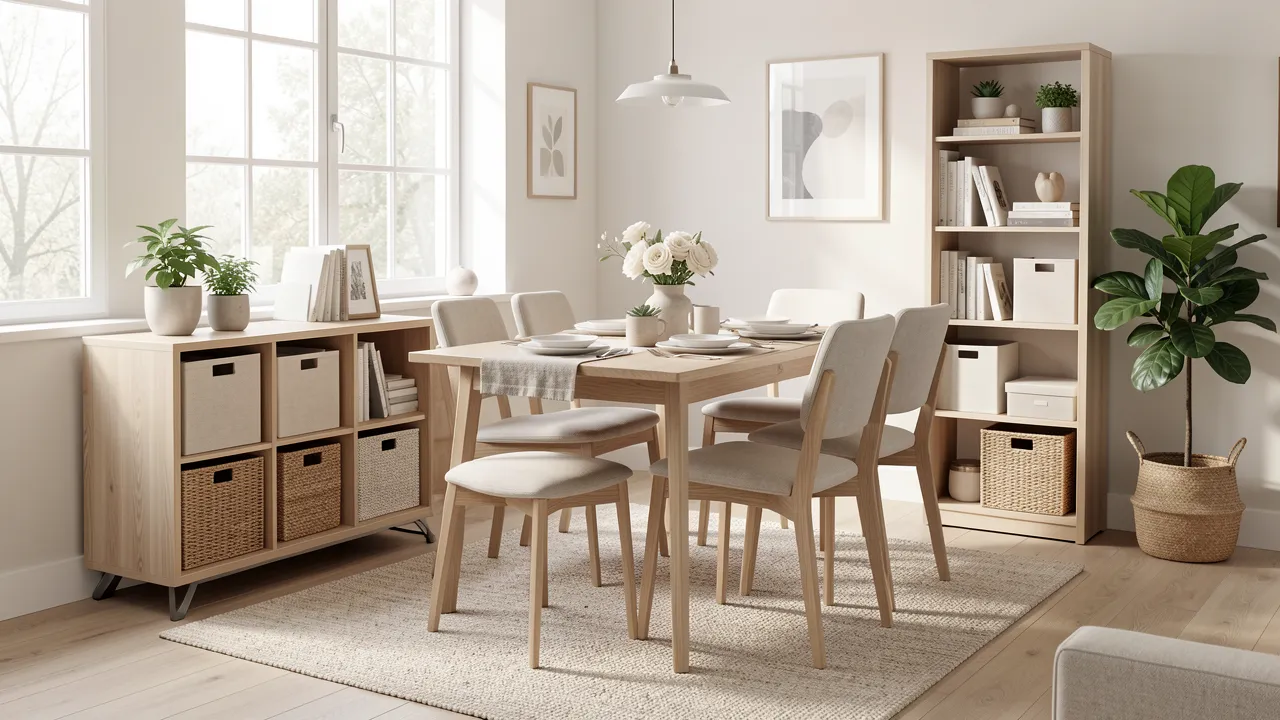
A dining area without nearby storage can quickly become cluttered. Tenants need somewhere for plates, glassware, placemats and everyday items, especially in furnished rentals where kitchen cabinets may already be full. A slim sideboard, wall shelf or well-planned kitchen storage can make a modest dining zone feel far more usable.
Avoid filling the room with decorative objects that create cleaning work or risk breakage. Practical storage adds more rental value than elaborate table styling. A simple set of durable dishes and a few neutral serving pieces are usually sufficient for a furnished property.
Durable furniture protects your rental income
Dining furniture experiences frequent impact, spills, dragging and cleaning. A low-cost table with a delicate veneer may look appealing on listing photographs but can soon show water rings, chips or swollen edges. Replacement costs and repeated repairs can erode the benefit of a lower initial purchase price.
Choose materials suited to the expected intensity of use. Solid wood or high-quality laminate can be sensible options when properly finished. Metal frames offer durability, though sharp corners and unstable legs should be avoided. Chairs deserve equal scrutiny: test their stability, inspect joints and select upholstery only when it can be cleaned easily or replaced at reasonable cost.
Durability is part of rental positioning, not merely a maintenance issue. A higher-quality furnished rental can justify stronger rent when its fittings feel reliable, coherent and ready for immediate occupation. Conversely, luxury-looking pieces that wear quickly may undermine tenant confidence at check-in.
Presentation should support, not replace, investment fundamentals
A tasteful dining table can improve listing photographs and help prospective tenants visualise shared meals or relaxed evenings at home. Use restrained styling: coordinated chairs, a clean table surface, suitable overhead lighting and perhaps one modest centrepiece. The aim is to make the space feel welcoming rather than overly staged.
Before committing to a purchase, assess the dining area alongside the wider financial and operational picture:
- Check the usable floor space after placing realistic furniture.
- Confirm that chair movement does not block doors, cupboards or escape routes.
- Match seating capacity to the likely tenant household.
- Prefer surfaces and chairs that tolerate regular cleaning and minor accidents.
- Review storage for tableware, food and household equipment.
- Compare furnishing costs with achievable rent and likely replacement cycles.
- Photograph the area honestly for rental listings, without concealing layout limits.
A strong furnished rental combines visual appeal with low-friction everyday living. The dining area may be a small portion of the floor plan, but it can influence whether a property feels cramped, convenient or suitably equipped for its target market.
A well-planned dining space can support a stronger rental proposition
The best dining area is not necessarily the most luxurious one. It is the one that fits the property, serves the intended tenants and remains presentable after months of normal use. By examining circulation, storage, materials and seating capacity during the viewing, you can make furnishing decisions that protect both tenant appeal and long-term rental performance.
Frequently asked questions
Should every furnished rental include a dining table?
Most furnished rentals benefit from a dining surface, even when space is limited. In very small studios, a compact table, breakfast bar or wall-mounted solution may be more suitable than a conventional four-seat set.
What dining furniture is best for a rental property?
Choose stable, easy-clean furniture with finishes that resist scratches and spills. Simple solid wood, quality laminate and metal-frame designs are often practical, provided the size suits the room and the expected tenants.
Can a better dining area increase achievable rent?
It can support a higher rental position when it forms part of a consistently well-equipped home. It will not compensate for poor location, weak energy performance or an impractical layout, but it can improve viewing impressions and reduce objections from prospective tenants.