How to plate Gascon duck dishes with care
Gascon duck cookery rewards restraint at the table. Confit, magret and foie gras have strong identities, deep savoury flavours and distinctive textures that can be weakened by fussy presentation or poorly chosen tableware. A refined table setting should frame the food, preserve its temperature and make each element easy to enjoy, rather than turning a regional dish into decoration.
Gascon duck dishes begin with precise cooking
The duck traditions of the Gers rely on patient preparation and respect for fat, heat and seasoning. Duck confit is cooked slowly in its own rendered fat until the meat is tender and the skin can be crisped before serving. Magret de canard demands a different approach: the fat is rendered gradually in a cold pan, then the breast is finished briefly on the flesh side and rested before slicing. Foie gras is served chilled as a terrine or gently seared, depending on the style of dish.
For practical cooking tips, the gastronomy of the Gers offers a useful reference point for working with foie gras, magret and confit. These products benefit from careful control of fat, seasoning and serving temperature. A confit leg needs dry, high heat for crisp skin, while magret should remain rosé at its centre. Foie gras calls for cold plates when served as a terrine, or very hot pans and rapid handling when it is seared.
Confit relies on contrast between crisp skin and tender meat
A duck confit leg should arrive at the table hot, with golden skin and moist meat that separates easily from the bone. Drain excess fat after reheating, but do not strip away every trace of it: the richness is part of the dish. Serve one leg per person for a generous main course, or divide the meat into a smaller composed plate with beans, lentils or potatoes.
Magret benefits from a clear, uncluttered presentation
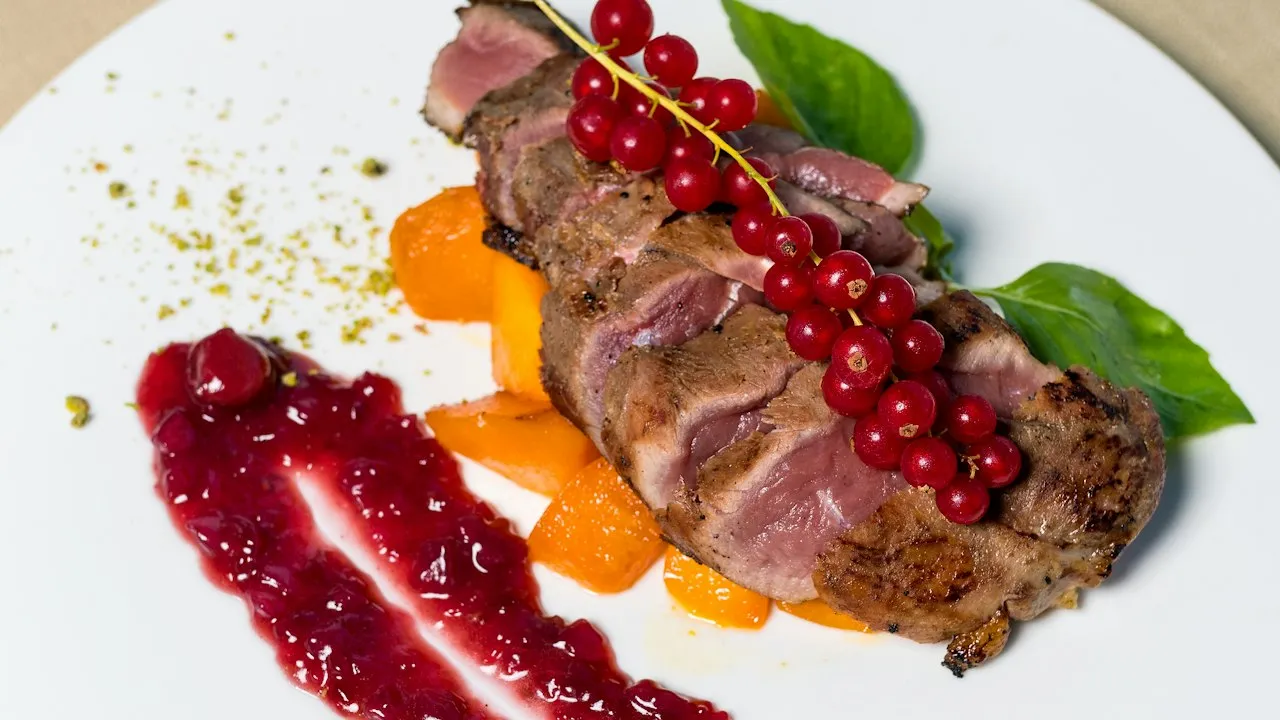
Slice rested magret across the grain into even pieces, usually five to seven slices per portion. Fan the slices slightly so that the rosy interior and rendered fat cap are visible. Avoid drowning the breast in sauce. A small pool of jus, placed beside rather than under the duck, keeps the skin edge and fat distinct.
Foie gras calls for gentle handling
Terrine-style foie gras is best sliced with a warmed, dry knife. Serve it chilled but not ice-cold, allowing a few minutes at room temperature so its aroma develops. Seared foie gras should be served immediately on a warm plate, with a sharp or lightly sweet accompaniment such as green apple, quince, grape or seasonal fig.
Tableware should preserve heat, texture and proportion
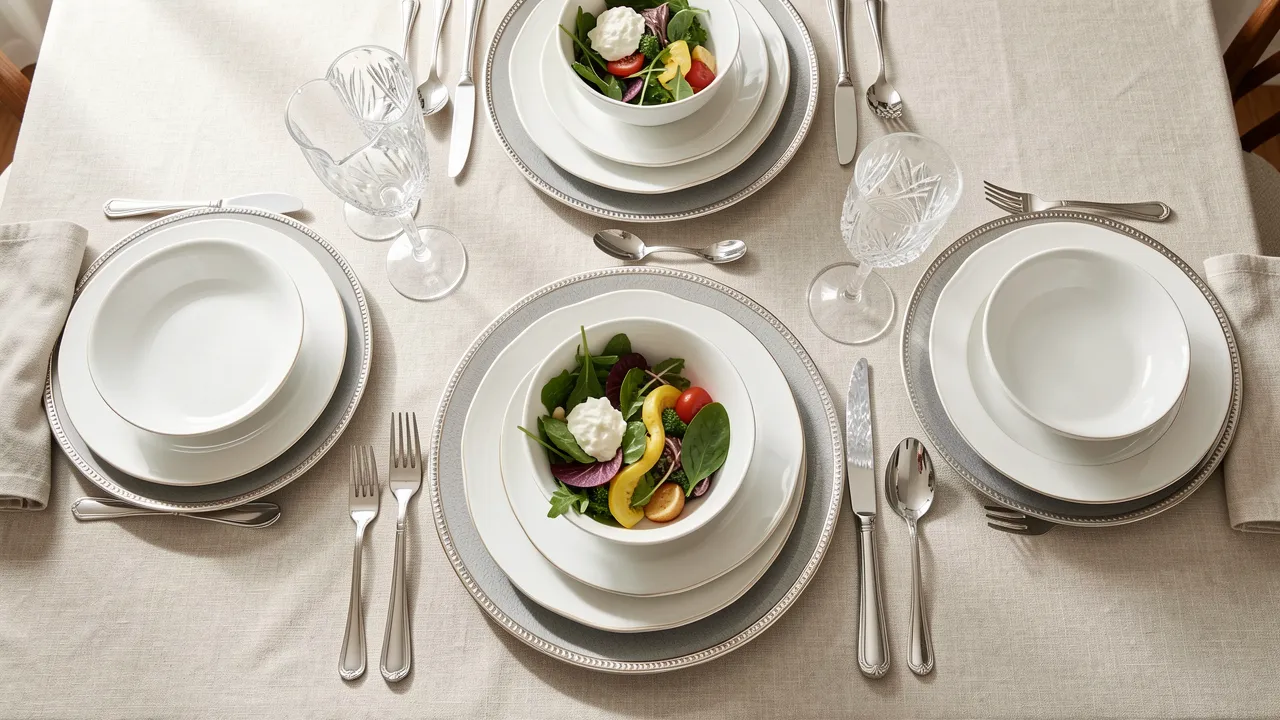
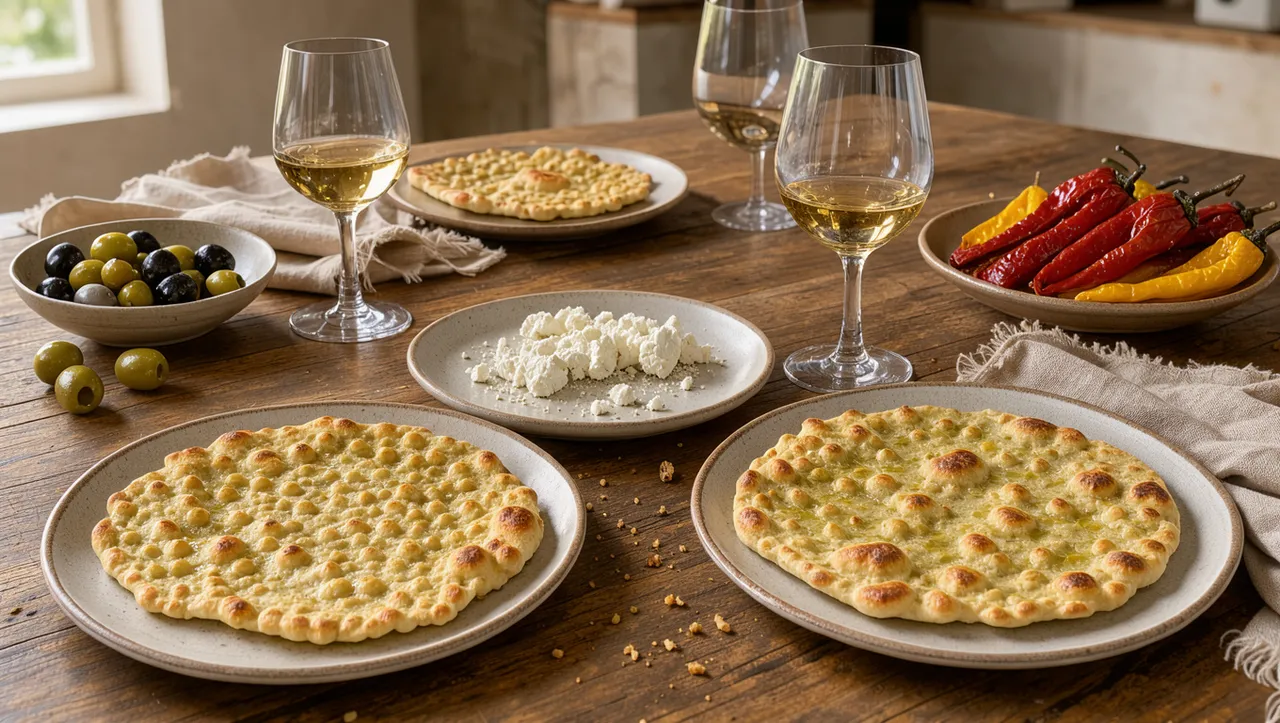
Luxury tableware can bring a sense of occasion to Gascon cooking, provided the plate shape and material serve the dish. A broad white porcelain plate is often the safest choice for magret, because it provides contrast without distracting from the colour of the meat. For confit, a shallow stoneware plate or low-sided bowl retains warmth and comfortably holds beans, pommes sarladaises or a reduced sauce.
Warm plates for hot duck dishes prevent the fat from congealing too quickly. Conversely, foie gras terrines need cool plates so the slices keep their clean shape. Avoid oversized plates for small portions of foie gras, as the food can appear sparse and lose its sense of generosity.
| Duck dish | Recommended serving piece | Best temperature | Useful cutlery |
|---|---|---|---|
| Duck confit | Shallow warm plate or oval serving dish | Hot | Dinner knife and fork |
| Sliced magret | Wide flat porcelain plate | Warm | Sharp table knife and fork |
| Foie gras terrine | Small chilled plate | Cool | Small knife or spreader |
| Seared foie gras | Warm starter plate | Hot | Fork and small knife |
| Duck rillettes | Stoneware ramekin or small bowl | Cool room temperature | Spreader knife |
Choose cutlery with a comfortable weight and a clean edge. A steak knife is not generally required for properly cooked magret, but a well-sharpened dinner knife should cut the slices without tearing them. For confit, sturdy forks help guests separate tender meat from the bone without awkward effort.
Seasonal garnishes give duck dishes freshness
Duck needs acidity, bitterness or vegetal freshness to balance its richness. In autumn and winter, consider braised red cabbage, roasted squash, celeriac purée, lentils or sautéed wild mushrooms. Potatoes cooked in duck fat suit confit particularly well, although a modest portion prevents the plate from becoming overly heavy.
For magret, fruit can be used with discipline. Sour cherries, blackberries, plums and figs work when their sweetness is countered by vinegar, pepper or a reduced duck jus. A lightly dressed bitter-leaf salad can also bring welcome contrast. Arrange the garnish in a compact area rather than scattering components across the plate.
Sauces should support the meat’s flavour. A reduced jus with shallots and Armagnac, a pepper sauce used sparingly, or a fruit reduction sharpened with wine vinegar are suitable choices. Keep sauces separate from crisp skin whenever texture is a priority.
Portion balance makes a rich meal feel composed
A full duck confit leg is substantial, so choose one main garnish and one fresh element. For magret, approximately 150 to 180 grams of cooked breast per person is usually sufficient when served with vegetables and sauce. Foie gras is richer still: a 40 to 60 gram terrine portion makes an elegant starter.
Use height carefully. A few slices of magret can be gently overlapped, while a confit leg looks best placed naturally rather than stacked. Foie gras terrine should remain low and precise, accompanied by toasted bread or brioche served on a separate plate to preserve its crispness.
A thoughtful table setting lets Gers duck take centre stage
The finest presentation decisions are practical as well as attractive. They protect heat, preserve crispness, make sauces easy to manage and give guests room to cut and taste each bite. Whether you use polished porcelain, hand-finished stoneware or understated silverware, the table should respect the direct, generous character of Gascon cuisine.
- Match plate temperature to the dish, warm for confit and magret, cool for foie gras terrine.
- Use broad, plain plates for sliced magret, allowing the meat’s colour and texture to remain visible.
- Serve confit with one robust garnish and a fresh acidic element.
- Keep sauces controlled and away from crackling duck skin.
- Choose smaller plates and modest portions for foie gras, then add bread separately.
- Provide balanced, sharp cutlery that lets guests enjoy tender duck without struggle.